
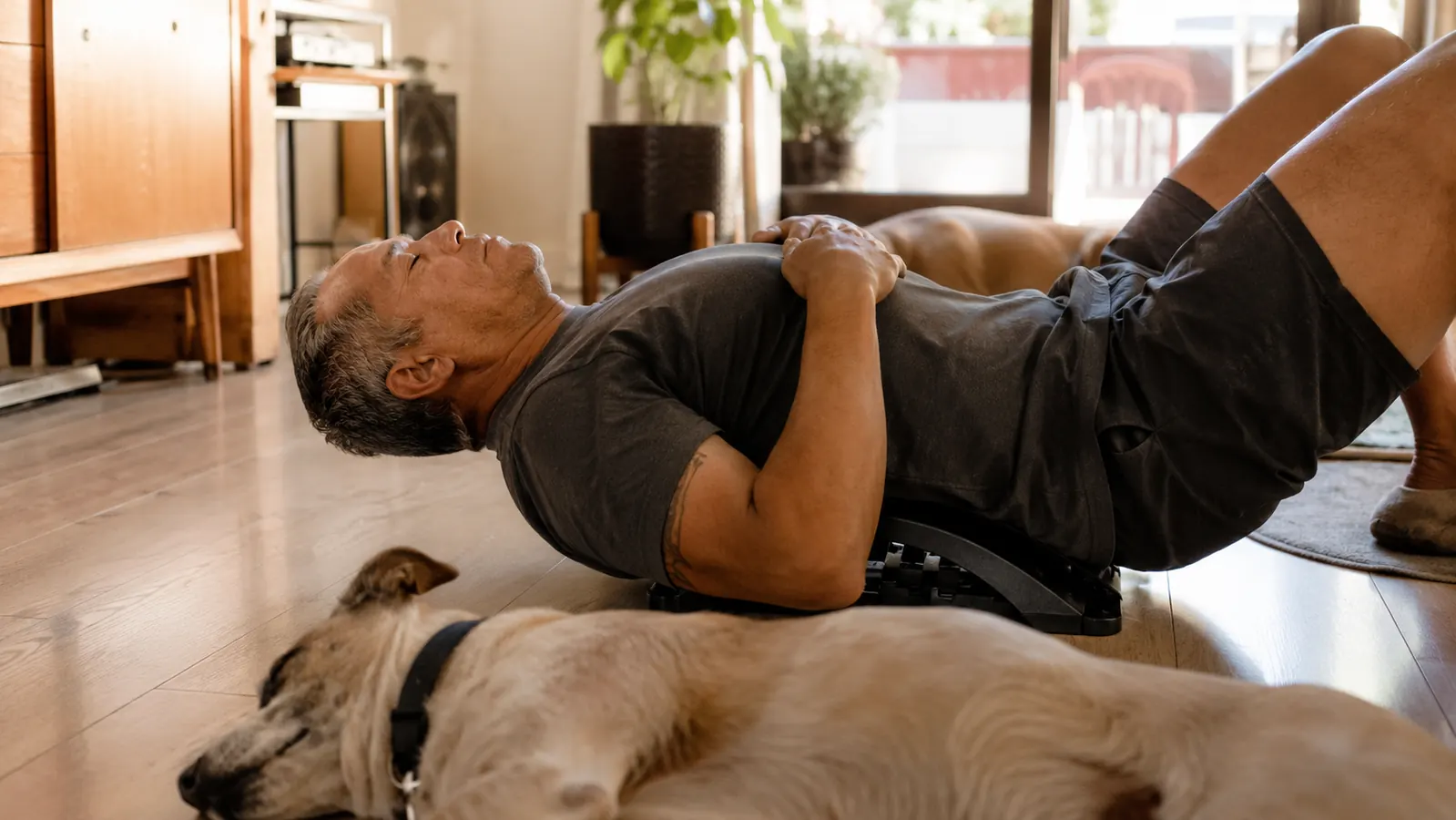
For years my alarm went off at 4:15 and the first ten minutes of my day were the worst part of it, not the driving. I'm Ray Mendoza, I drive Route 14 out of the east depot, and twenty-two years of climbing in and out of a bus seat has left my lower back stiff enough most mornings that I'd sit on the edge of the bed for a minute just working up the nerve to stand. It wasn't pain exactly, more like my spine had rusted shut overnight and needed to be cracked back into working order before it would cooperate. That's the specific problem I bought the MINOLL back stretcher to solve, and three months of using it almost every single morning later, I've got a real answer on whether ten minutes on the floor before sunrise actually changes anything, or whether it's just another gadget that looked good in the reviews.
I want to be honest about where my head was before I bought it. My daughter sent me a link to the MINOLL back stretcher after I complained one too many times about how long it took me to loosen up before an early shift. I looked at it and thought it was basically a plastic hump you lie your back over, which, fair, that's exactly what it is. But she pointed out the MINOLL has multiple stackable arch pieces so you can start low and work up, instead of the fixed-curve arcs that just throw your whole lower back into a stretch you're not ready for. That adjustability is the reason I actually gave it a real shot instead of letting it join the pile of recovery gear gathering dust in my closet.
The Quick Verdict
The MINOLL back stretcher is the reason my first ten minutes out of bed don't feel like a fight anymore. The adjustable levels matter more than I expected, the build has held up to three months of floor use, and at under thirty dollars it's cheaper than one chiropractor visit. It's not a miracle, and the lowest level is genuinely uncomfortable for a stiff 56-year-old, but it earns its spot on my bedroom floor.
Amazon Check Today's Price →Sick of needing five minutes just to stand up straight in the morning?
The MINOLL back stretcher is the first thing my feet touch after the alarm goes off. Check today's price on Amazon and see the adjustable arch levels for yourself.
Amazon Check Today's Price on Amazon →How I've Used It
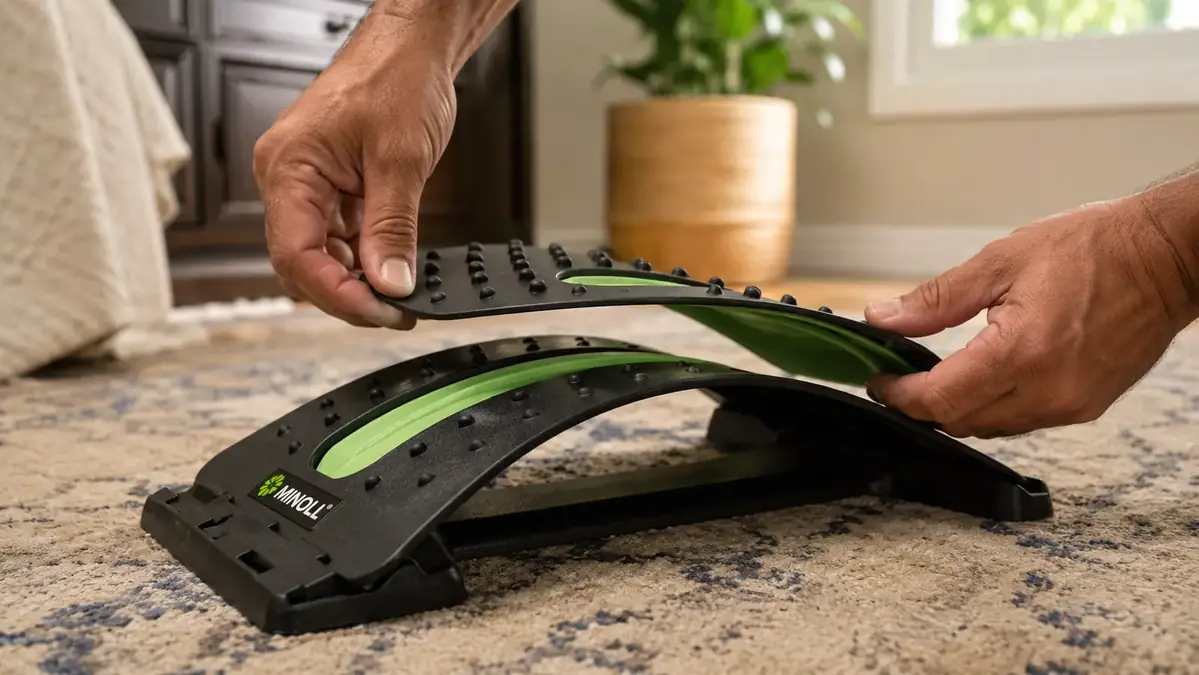
The MINOLL comes with three separate arch pieces that stack and lock together, plus a fourth flatter piece for the very beginning if you're as stiff as I was the first week. I keep mine on the rug beside my bed, not tucked in a closet, because a tool you have to go dig out is a tool you'll skip on the mornings you need it most. My routine is dead simple. Alarm goes off, I sit up, I lower myself down onto the arc with my lower back centered on the curve and my arms stretched back over my head, and I just breathe and let gravity do the work for about eight to ten minutes while I scroll the route schedule on my phone.
The first two weeks I stayed on the lowest setting, the flat starter piece, because even that gentle curve had my lower back complaining in a way that told me years of sitting in a bus seat had shortened muscles I wasn't using. By week three I moved up to the middle arch, and by week six I was on the tallest setting most mornings, which gives a noticeably deeper stretch across the lumbar region. That gradual climb is the whole point of buying an adjustable arc instead of a fixed one, and it's the single biggest reason this thing worked for me instead of just hurting.
On weekends I added a second, longer session, usually mid-morning after coffee, where I'll stay on the MINOLL for closer to fifteen minutes and add some gentle side-to-side rocking to hit the muscles along my hips too. Three months in, I've used it somewhere around eighty times, missing maybe one or two mornings a week when I've got a 3 a.m. start and just don't have the extra ten minutes to spare. That's the real test for a recovery tool like this, not one good stretch in a showroom, but whether a tired guy actually keeps doing it on a Tuesday in February.
The Adjustability Is the Whole Product
I've tried a couple of the cheap fixed-curve back stretchers before, the kind that come as one solid piece with no way to change the height. Both of them sat in my closet after two uses because the curve was too aggressive for a stiff lower back first thing in the morning. The MINOLL solves that specific problem with its stacking arch system. You start flat, or close to it, and you literally build the curve taller as your body loosens up over weeks, which for someone my age with two decades of driving-related stiffness matters a lot more than it sounds like it should.
The MINOLL's ridged center channel is the other detail that stood out once I actually used it daily. There's a groove running down the middle of each arch piece that your spine settles into, so the pressure lands on the muscles beside your spine instead of directly on the bony part of it. That's a small design choice, but it's the difference between a stretch that feels productive and one that just feels like lying on a curb. My back has never felt bruised or sore in a bad way after a session, which I can't say about some of the harder foam rollers I've tried on my lower back in the past.
One thing worth flagging honestly, the lowest setting still isn't gentle. Even the flattest piece put more of a stretch on my lower back than I expected the first few mornings, and I'd wake up slightly sorer for about a week before my body adjusted. If you're extremely stiff or dealing with any kind of active back issue, I'd start with just a few minutes at the lowest level rather than diving in for a full ten-minute session like I did out of impatience.
Does It Actually Fix Morning Stiffness
Here's where I have to be straight with you instead of just selling the thing. The MINOLL didn't erase twenty-two years of sitting in a bus seat, and nothing in a box for thirty dollars is going to do that. What it does is take the edge off that first brutal ten minutes out of bed, the part where I used to shuffle to the coffee maker bent slightly forward like an old man before my back would finally let me stand up straight.
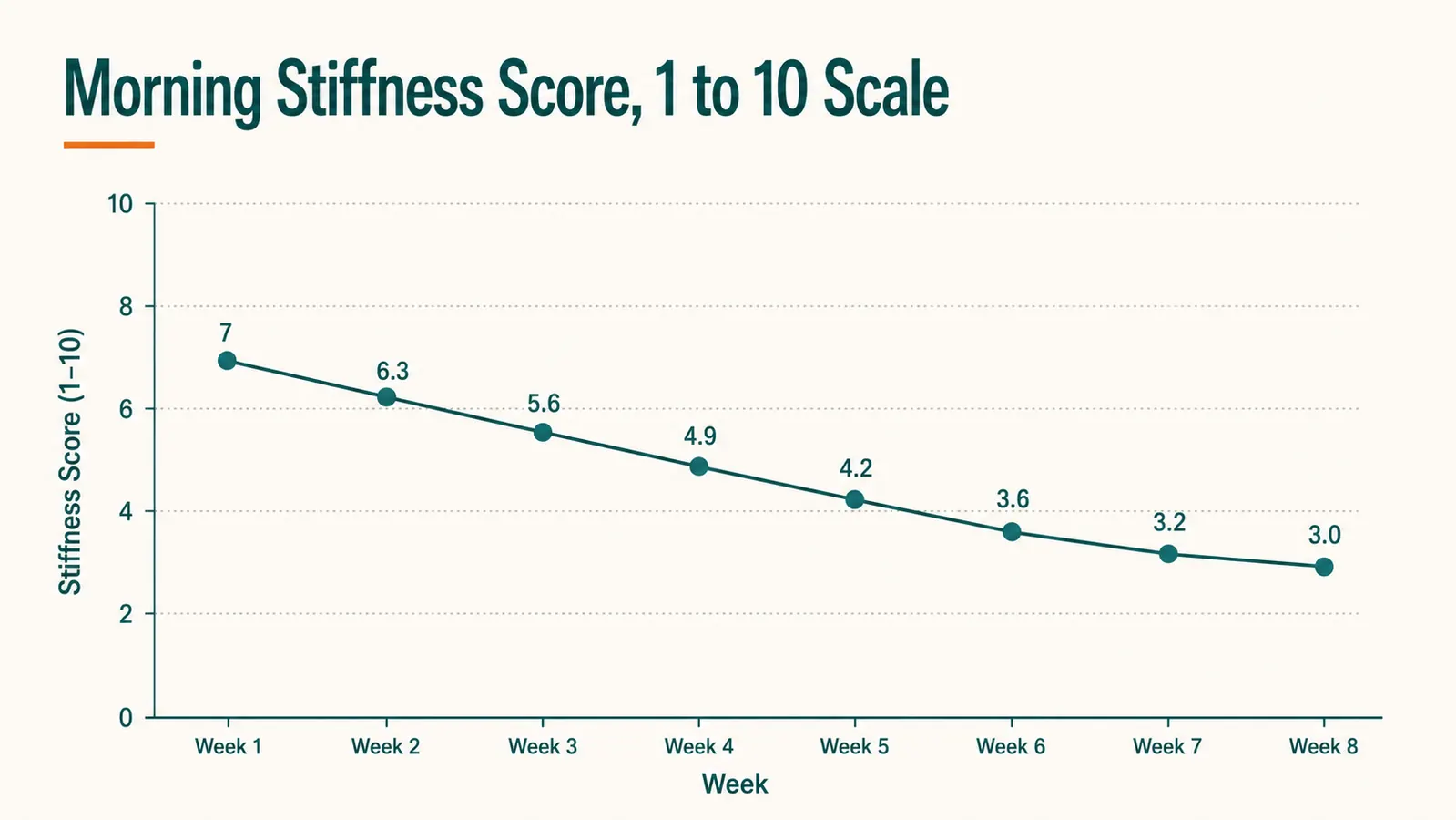
I started tracking it loosely on my phone about two weeks in, just a rough 1 to 10 stiffness score jotted down right after I got out of bed, before and separately after using the MINOLL. In week one, before I'd built up any consistency, I was averaging a 7 most mornings, the kind of stiff where you brace against the nightstand to stand. By week eight, that same first-thing-in-the-morning score had dropped to around a 3 on most days, and it stayed there even on mornings I skipped the arc entirely, which tells me something actually changed in how my lower back holds tension overnight, not just a temporary loosening right after use.
The other change I noticed, and this one surprised me, is that I stopped needing to lean on the bus doorframe to stretch my back before my first pickup of the day. That was a habit I'd had for years, quietly cracking my back against the metal frame while passengers boarded, and I only noticed I'd stopped doing it when a regular rider asked if my back was doing better. It was a small moment, but it told me the improvement wasn't just something I was imagining because I wanted the thirty dollars to have been worth it.
Build Quality After Three Months on the Floor
The MINOLL is made from a hard, textured plastic that hasn't cracked, flexed, or squeaked once in three months of daily floor use, which matters when your full body weight is resting on a curved piece of plastic every morning. The arch pieces lock together with a simple slide mechanism, and I was worried early on that repeated stacking and unstacking would wear that connection loose, but it still clicks together as solidly as it did the first week. The rubberized feet on the bottom have kept it from sliding on my hardwood floor even during the sessions where I rock side to side.
The one wear spot I've noticed is minor scuffing on the underside from being slid in and out from beside my bed nearly every day. Purely cosmetic, no impact on how it performs, but I mention it because I've had cheaper plastic gear crack under far less daily handling than this has taken. For a product built around your full body weight leaning into a curved plastic edge, holding up without a single creak after roughly eighty uses says something about the material MINOLL used.
Who's Actually Behind MINOLL
MINOLL isn't a name I recognized before my daughter sent me the link, and I'll admit that gave me pause. But the design itself, an adjustable multi-level arch for graduated spine decompression, is a physical-therapy concept that's been around for a long time under different brand names. What MINOLL added that made it worth trying was the stacking system that lets you control exactly how deep the curve goes, rather than committing to one fixed intensity out of the box. That's the detail that separates it from the single-piece back crackers I'd tried and abandoned before.
No batteries, no motor, nothing that can burn out or need charging before an early shift. That simplicity is part of why it's survived three months of daily use without a single functional issue. It's closer to a step stool than a gadget, and gadgets are exactly the kind of recovery product that's let me down before, so the plainness of the design actually earned some trust from me over time rather than costing it.

Where It Falls Short
I'm not going to pretend this thing is perfect. The lowest setting is still more of a stretch than a lot of people expect, and if you're dealing with acute lower back pain rather than general morning stiffness, I'd talk to a doctor before lying your full weight over any arch, adjustable or not. This worked for me because my issue was stiffness and tightness built up from years of sitting, not an active injury, and those are two very different problems that deserve different solutions.
It also doesn't do much for the tightness I get in my hips and glutes after a long shift, the MINOLL is built specifically for the lower back arc, not a full-body recovery tool. I still keep other stretching gear around for that, so this hasn't replaced everything in my morning routine, just the part that used to be worst. And it's a floor-only tool. If getting down onto a rug and back up again is difficult for you, that's worth thinking through before buying, since the getting up and down is honestly harder on some mornings than the stretch itself.
Last thing worth saying plainly. Don't jump straight to the tallest arch setting because you're impatient, like I nearly did. I cleared the general idea with my doctor at a routine checkup before making it a daily habit, and given that this puts real pressure on your spine, I'd tell anyone with a history of disc problems or recent back surgery to do the same before starting.
What I Liked
- Adjustable arch levels let you build up gradually instead of forcing one fixed intensity
- Ridged spine channel keeps pressure off the bony part of your back
- Solid plastic construction survived three months of daily full-weight floor use
- No batteries, no motor, nothing to charge or burn out
- Under thirty dollars, cheaper than a single chiropractor visit
Where It Falls Short
- Even the lowest setting is a real stretch, not a gentle warmup
- Floor-only, getting down and back up can be its own challenge for some people
- Doesn't help hip or glute tightness the way other tools do
- First week can leave you slightly sorer before it gets better
It's closer to a step stool than a gadget, and gadgets are exactly the kind of recovery product that's let me down before.
Who This Is For
If your job has you sitting or standing in one position for hours, driving, nursing, warehouse work, and you wake up feeling like your lower back needs a minute before it'll cooperate, the MINOLL is built for exactly that kind of morning stiffness. It's especially good for people who want a gradual approach rather than being thrown into a full stretch on day one, since the stacking arches let a genuinely stiff 56-year-old like me work up to it over several weeks instead of quitting after one painful session. If you're budget-conscious and tired of gear that breaks down after a month, this one has taken eighty-plus mornings of full body weight without a single creak.
Who Should Skip It
If you're dealing with an active disc injury, recent back surgery, or any pain your doctor is actively treating, get clearance before lying your weight over any back stretcher, adjustable or not. And if getting up and down off the floor is a real physical challenge for you, the setup itself might cause more frustration than relief. I'd also skip it if you're looking for a single tool to cover your whole body, this is built specifically for lower back decompression, and I still lean on other gear for my hips and shoulders. It rewards patience and gradual use, not a first-day deep stretch.
Three months, eighty-plus mornings, and I still can't skip it before an early shift.
If your mornings start the way mine used to, stiff, slow, bracing against the nightstand, it might be worth the same shot my daughter talked me into. See today's price on Amazon.
Amazon Check Today's Price on Amazon →