
Twenty-two years behind the wheel of a 40-foot transit bus does something to a man's spine that no amount of stretching in the break room ever fully fixes. I'm Ray Mendoza, I drive Route 14 out of the east depot, and by year fifteen I had a knot between my shoulder blades that felt like someone parked a golf ball under my scapula and left it there. My lower back wasn't much better. Eight to twelve hours a day braced against a bus seat, hitting potholes on Fifth Street, twisting to check my mirrors, it adds up in a way that gym soreness never did when I was younger. That's the knot a Body Back Buddy massage cane ended up living for full time once my wife finally bought me one, and four months of near-daily use later, I've got a real answer on whether it works or just sits in a drawer like the rest of my recovery gadgets.
I tried the usual stuff first. A foam roller that just sat in the closet because I couldn't get it on the spot that actually hurt. A cheap electric massager that buzzed but never dug in deep enough to matter. My wife finally got tired of watching me lean against door frames trying to work my own back and bought me the Body Back Buddy for my birthday four years ago. I want to be upfront that I was skeptical. It's a plastic cane with knobs on it, made by a company literally called Body Back, and I figured it would join the pile of things that sounded good in the Amazon reviews and did nothing on my actual back. This spring, after a bad stretch where my lower back locked up twice in one week, I started using it every single day instead of just when I remembered, and that's the stretch of use this review is really built on.
The Quick Verdict
The Body Back Buddy is the one recovery tool I actually reach for after every shift. It gets into spots between my shoulder blades that nothing else touches, it's built tough enough to survive being tossed in a bus cab for four months, and at under thirty bucks it costs less than one massage therapy copay.
Amazon Check Today's Price →Tired of white-knuckling through the last two hours of your shift?
The Body Back Buddy is the tool I keep behind my driver's seat for a reason. Check today's price on Amazon and see why over 18,000 people have rated it 4.6 stars.
Amazon Check Today's Price on Amazon →How I've Used It
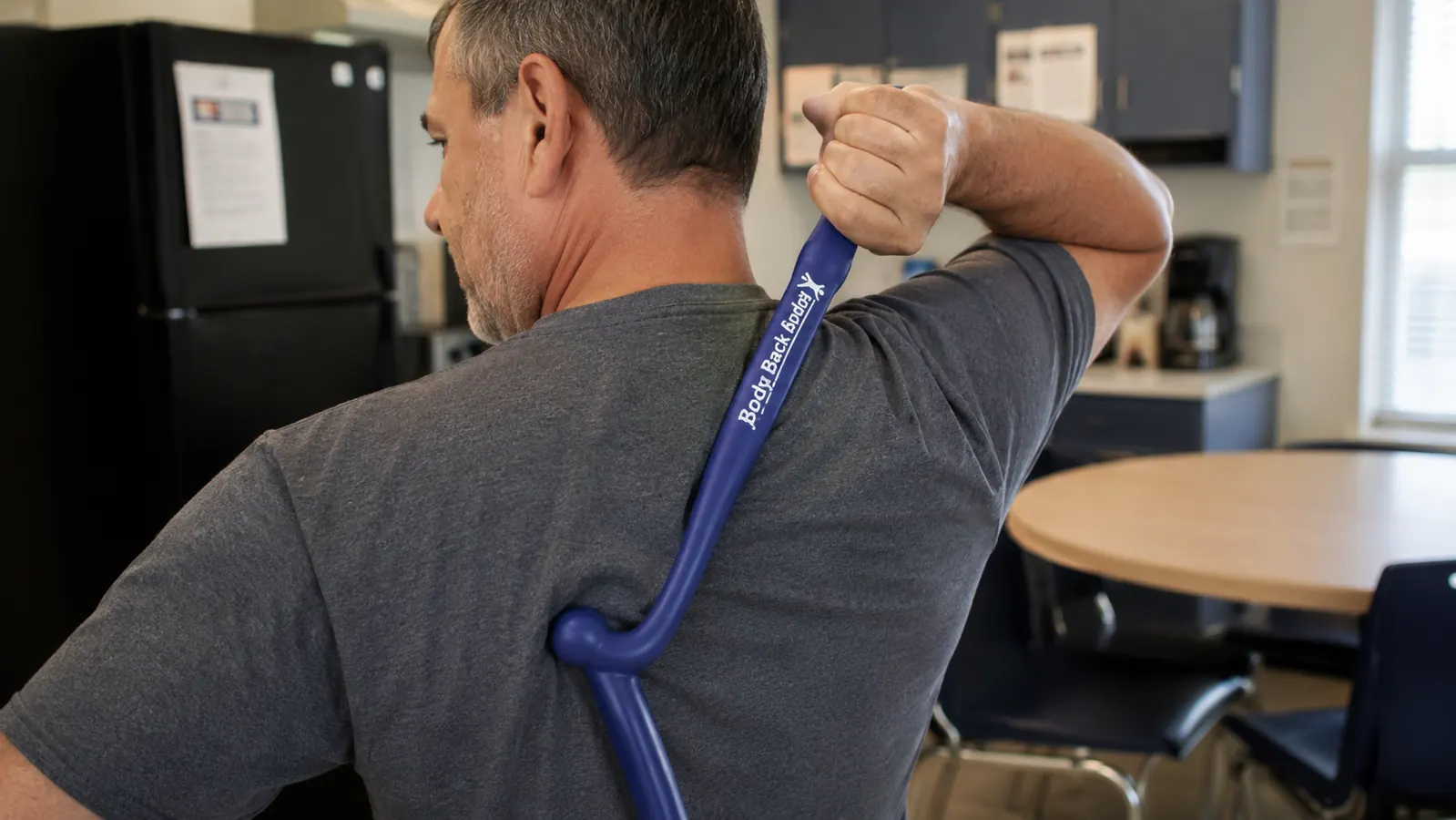
I didn't read the instruction card that came with the Body Back Buddy. I just started jamming the big rounded hook into the knot under my left shoulder blade the same way my old physical therapist used to dig her thumb in, except now I could reach it myself and control exactly how hard. The cane is shaped like a question mark with two hooks, one big, one small, and six rounded nubs positioned around the curves so you can hit a trigger point from almost any angle without needing a second person or a doorframe to lean against.
My routine settled into something simple over the first few weeks. I keep the Body Back Buddy in a canvas bag behind the driver's seat at the depot, and on my two lunch breaks I'll spend three or four minutes working the spot between my shoulder blades and the base of my neck where the tension from constant mirror-checking builds up. At home, before I take my dogs Duke and Biscuit on our evening walk, I'll lie on the living room floor and use the long handle to reach my lower back and the tight band along my hip where sciatica likes to flare after a long shift behind the wheel.
On weekends I added a third session, usually Saturday morning before I do yard work, since two days off in a row is when I actually notice how much tension built up during the work week. That third session runs closer to eight or ten minutes and covers more ground, my forearms from gripping the wheel, my neck, and the muscles along my shoulder blade that never fully release during a shift.
Four months in, I've used the cane somewhere around 300 times if I'm being honest with the math. It's ridden in a hot cab in July, gotten dropped on the bus floor more than once, and traveled in my gym bag to physical therapy appointments where my therapist actually asked where I got it. That kind of daily abuse across an actual work vehicle is the real test, not one good session in a showroom under perfect conditions.
The Build Quality Nobody Tells You About
The Body Back Buddy is made from a solid polymer, not the cheap hollow plastic I expected for the price point. It's USA-made, which matters to me since I've bought enough dollar-store recovery gadgets that cracked within a month of light use. Mine has a small scuff on the long end from sliding across the bus floor during a hard brake, but structurally it hasn't budged an inch. No creaking, no give in the joints where the hooks meet the curve, nothing that suggests it's wearing down.
The nubs themselves are firm but not sharp. That firmness is the whole point of the design. A softer massage tool feels nice for about ten seconds and then does nothing for the actual knot underneath the surface muscle. The Body Back Buddy's rounded points are hard enough to press through the outer muscle layer and find the trigger point, which is uncomfortable in the same way a deep tissue massage is uncomfortable right before it turns into real relief.
One thing I'll flag honestly. The finish can feel a little slick if your hands are sweaty, which happens more than I'd like after a summer shift with a broken AC unit on the bus. I've never dropped it on my face, but I've had a couple of close calls when my grip slipped mid-stroke working on my lower back. Nothing dangerous, just something to know going in if you're planning to use it after a hot, sweaty shift like I do.
Does It Actually Help After a 12-Hour Shift
Here's where I have to be honest instead of selling you something. The Body Back Buddy doesn't erase a 12-hour shift. Nothing short of a career change is going to do that. What it does is take the edge off the specific knots that build up from sitting in the same position hour after hour, and it does that faster and more precisely than anything else I've owned or tried.
On my worst days, when my lower back locks up after four hours of stop-and-go traffic on Fifth Street, I can work the long hook into the muscle beside my spine and feel real release within two or three minutes. That's not exaggeration. My old approach was to grit my teeth until I got home and could lie on a heating pad for twenty minutes. Now I can do a version of that release on my lunch break, sitting in the depot break room, and finish my second half-shift without the same grinding tightness dragging on me by hour ten.
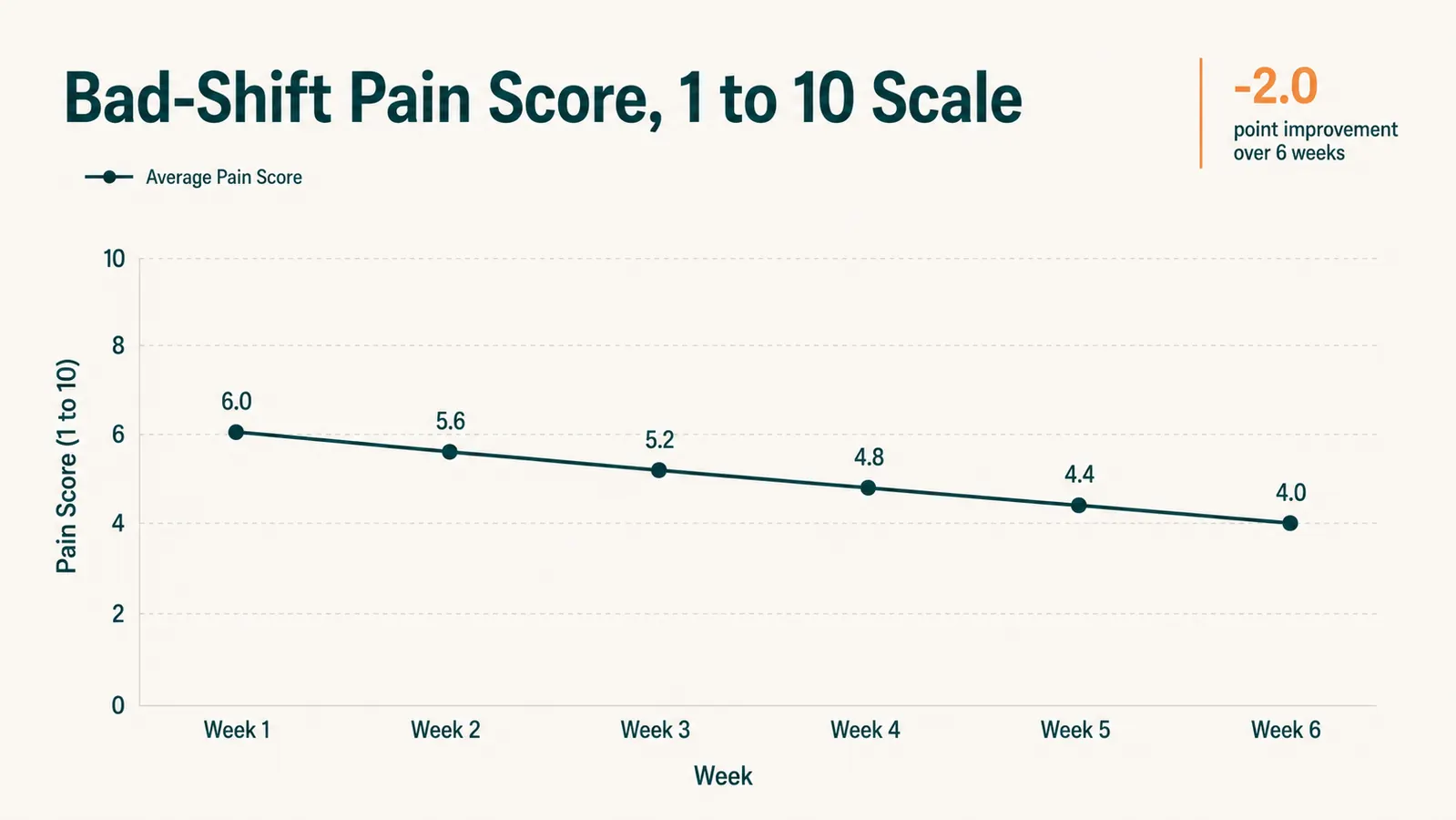
I tracked it loosely for about six weeks this spring using a simple 1 to 10 pain scale I jotted in my phone notes after each shift. Before I started using the cane consistently twice a day, I was averaging a 6 on bad shift days. By week four of consistent use, that same type of shift averaged closer to a 4. It's not a miracle number, but it's the difference between coming home and collapsing on the couch versus coming home and still being able to walk Duke and Biscuit around the block like I used to before the knot took over my evenings.
Who's Actually Made This, And Does That Matter
Body Back has been making this exact cane design since before Amazon reviews even existed, which tells you something. It's not a dropshipped knockoff with a made-up brand name slapped on a generic mold. Physical therapists have recommended this specific tool, this specific shape, for decades because the self-massage cane design solves a real mechanical problem: you can't apply firm, targeted pressure to your own upper back or shoulder blade area without either a second person or a tool with the right leverage and reach.
That history matters to me as a guy who's been burned by trend products before. My cousin sent me a percussion massage gun two Christmases ago that looked incredible in the unboxing video and died after eight months of light use. The Body Back Buddy has no batteries, no motor, nothing to burn out. It's closer to a good wrench than a gadget, and that simplicity is exactly why it's held up in my bus cab for four months without a single functional issue, not one crack or loose joint.
Where It Falls Short
I'm not going to tell you this thing is perfect, because it isn't. It requires effort on your part. This is not a lay-back-and-relax tool like a heated massage chair at the mall. You're the one applying the pressure, working your own muscles, and figuring out the right angle for your specific body. The first two weeks I owned it, I honestly wasn't using it right and got mediocre results because I was pressing too lightly, worried about hurting myself instead of trusting the design.
It also doesn't do much for deep hip or glute tightness the way a lacrosse ball wedged against a wall can. I still keep a lacrosse ball in my gym bag for that specific spot, so the Body Back Buddy hasn't fully replaced every recovery tool I own. Think of it as the best tool for your upper back, shoulders, and the muscles beside your spine, and a strong but secondary option for your lower back and hips, where a ball or a foam roller still does a bit more for me.
Last thing worth saying plainly. If you've got a shoulder injury or a disc issue your doctor is actively treating, don't just start jamming a hard plastic hook into inflamed tissue because a bus driver on the internet said it worked for him. I cleared mine with my physical therapist before I leaned on it daily, and I'd tell anyone in a similar spot, especially anyone recovering from a recent injury, to do the same before making it part of a daily routine.
What I Liked
- Reaches spots between the shoulder blades that you genuinely cannot hit with your own hands
- Solid USA-made polymer construction that survived four months of daily use in a work vehicle
- No batteries, no charging, no motor to burn out
- Under thirty dollars, cheaper than a single massage therapy session
- Precise, targeted pressure instead of the vague coverage of a foam roller
Where It Falls Short
- Takes a couple weeks to learn the right angles and pressure for your own body
- Handle can feel slick with sweaty hands during summer shifts
- Doesn't replace a lacrosse ball or foam roller for hip and glute work
- Requires you to do the work yourself, no passive relief here
It's closer to a good wrench than a gadget, and that simplicity is exactly why it's held up in my bus cab for four months without a single functional issue.

Who This Is For
If you spend your workday sitting or standing in one fixed position, driving, nursing, warehouse picking, assembly line work, the Body Back Buddy is built for the exact kind of muscle tension that job creates. It's especially good if your pain concentrates between your shoulder blades or along one side of your lower back, since the hook shapes let you get real leverage on those spots without contorting yourself against a wall or waiting for someone else to help. If you're budget-conscious and tired of buying gadgets that die in a month, this one has earned its keep in my cab for four straight months with zero maintenance and no signs of quitting.
Who Should Skip It
If you want a passive, zero-effort recovery tool, this isn't it. Look at a heated massage cushion instead. And if your pain is mostly in your hips, glutes, or IT band, this cane helps some but a lacrosse ball or a foam roller will do more of the heavy lifting for those specific areas. I'd also skip it, at least without medical clearance first, if you're dealing with an active disc injury or a recent shoulder surgery. This is a firm, self-directed pressure tool, not a gentle spa treatment, and it rewards patience more than it rewards a first try.
Four months, 300-plus uses, and it's still the first thing I grab after a shift.
If your back feels like mine did before my wife bought this for me, it might be worth the same shot she gave me. See today's price on Amazon.
Amazon Check Today's Price on Amazon →