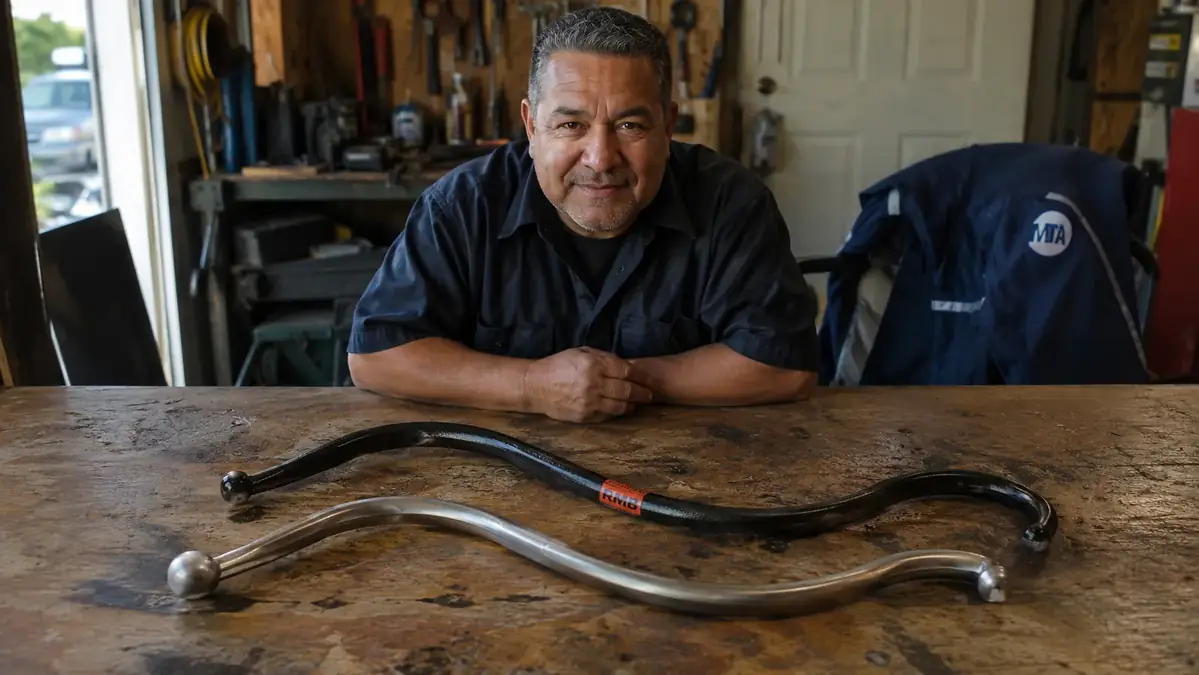
Short answer, if you only read one paragraph: I keep the Body Back Buddy in my bus bag and the Thera Cane sits in a drawer at home. Both are S-shaped or hooked wooden and plastic canes built to press trigger points you can't reach with your own hands. Both work, and neither one is a scam or a gimmick. But after twenty-two years of driving a city bus and testing every cheap fix that showed up in my mailbox, the Body Back Buddy wins on reach, grip comfort, and how often I actually pick it up without talking myself into it first. The Thera Cane has its fans and I'll tell you exactly where it's still better, but for a guy sitting eight to ten hours a shift behind a wheel, it's not the one I'd buy again if I had to do it over.
Here's the setup. I bought a Thera Cane first, back around 2019, because a physical therapist recommended the brand name and I didn't know there were other options on the market. I used it for about a year, on and off, mostly when the pain got bad enough that I couldn't ignore it anymore. Then a coworker on my route, a nurse's husband who does home health visits and deals with the same kind of back tightness from being on his feet all day, showed me his Body Back Buddy during a break at the depot. I bought one to compare them side by side, not to replace the Thera Cane right away, and within two weeks the Thera Cane was collecting dust in a kitchen drawer. This comparison is built off actually owning and using both for real, not off a spec sheet or a five-minute unboxing.
| Feature | Body Back Buddy | Thera Cane |
|---|---|---|
| Reach to mid and upper back | Long S-curve reaches between shoulder blades solo, no help needed | Shorter hook radius, harder to hit the exact spot without twisting awkwardly |
| Number of pressure points | 6 rounded hooks positioned for neck, shoulders, back, and feet | 4 knobs, spaced wider, fewer angle options |
| Grip comfort for 10+ minute sessions | Molded handle, doesn't dig into palms during longer use | Straight dowel grip, can leave hand marks after extended pressing |
| Build material | Molded polymer, USA made, FSA eligible | PVC pipe construction, feels more like a plumbing part |
| Weight and portability | About 1.2 lbs, fits in a duffel or under a bus seat | Slightly bulkier S-shape, awkward in a bag |
| Learning curve | Intuitive after 1-2 sessions, angles are forgiving | Takes longer to find the right leverage angle |
| Price on Amazon | Around $30, check today's price | Comparable price range, similar tier |
| Amazon rating volume | 4.6 stars across 18,000+ reviews | Fewer total reviews, more mixed on comfort |
Where the Body Back Buddy Wins
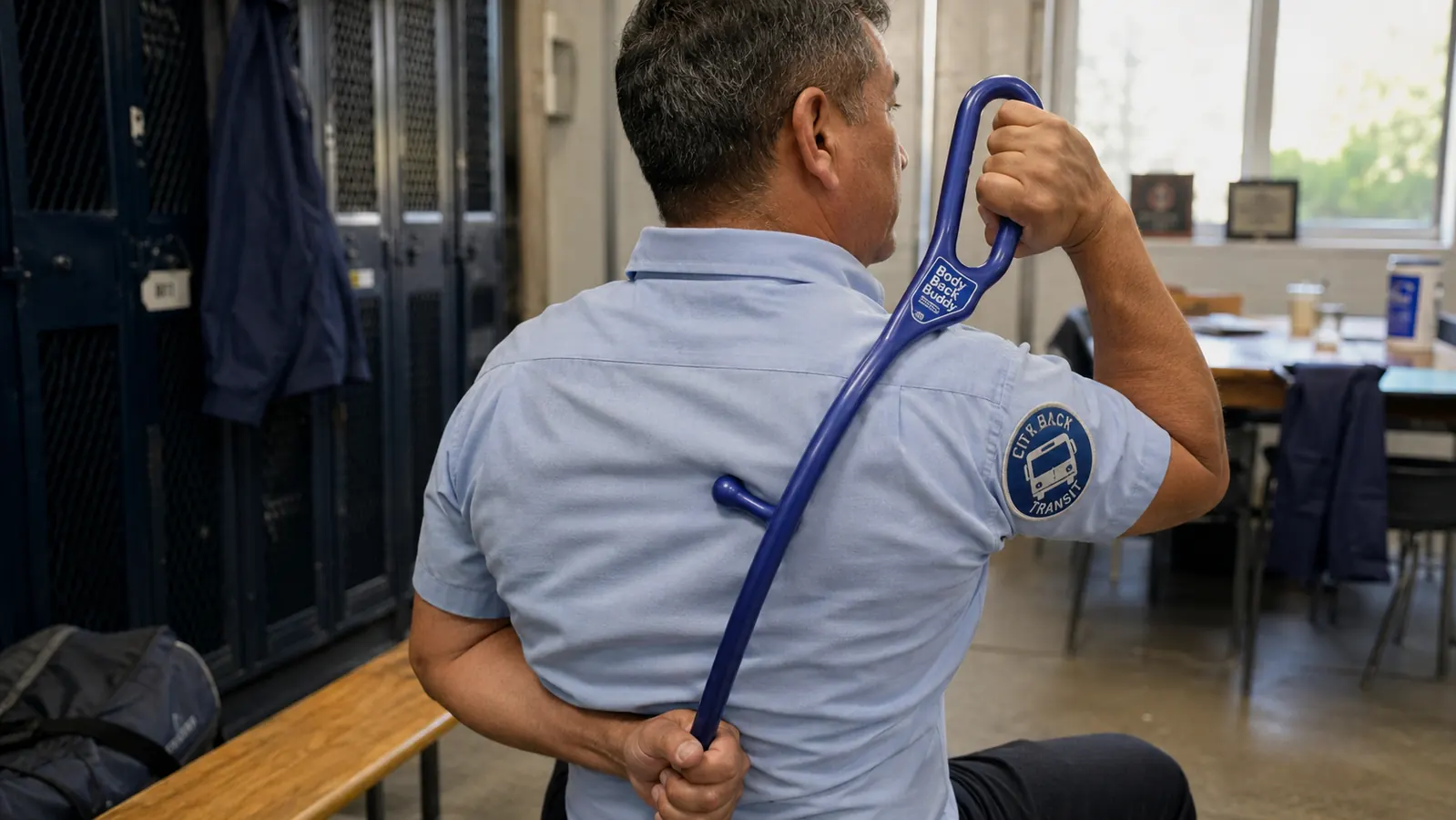
The single biggest difference is reach. My job has me sitting in one position for hours, and the knot I fight almost every shift sits right between my shoulder blade and my spine, a spot you simply cannot get to with your fingers no matter how flexible you are. The Body Back Buddy's long curved arm lets me hook one of the six pressure points into that exact spot and lean my body weight into it from over my shoulder. I don't need a second person, I don't need to lie on a tennis ball on the floor of a break room, I just reach back and press. The Thera Cane can technically get there too, but the shorter curve means I'm constantly repositioning my grip to find the angle, and half the time I give up before I've actually worked the knot loose.
The second thing that made the difference for me is the handle. This sounds small until you're gripping something for eight or ten minutes a night. The Body Back Buddy has a shaped handle that sits in your palm without digging in, so I can hold steady pressure on a spot in my lower back without my hand cramping up before the muscle does. The Thera Cane is basically a straight length of pipe, and after five or six minutes of real pressure my grip starts to slip and my palm gets sore, which means I ease off right when the muscle is finally starting to release. That handle difference alone is why I reach for the Body Back Buddy every single time instead of grabbing whichever one is closer.
The last thing worth mentioning is the two rounded hooks near the base, which I use on the arch of my foot after standing shifts, and the smaller ones I've used on my forearms after gripping a steering wheel all day. The Thera Cane is really built for one job, back and shoulder pressure, and it does that job fine. The Body Back Buddy stretches further into feet, calves, and forearms without feeling like you're improvising with the wrong tool. For a guy whose whole body takes a beating on shift, not just his back, that versatility matters more than it sounds like on paper.
Where the Thera Cane Wins
I want to be straight with you here because a real comparison isn't a hit piece on the other guy. The Thera Cane has been around since 1976 and there's a reason physical therapists still mention it by name, mine included. It's simple, it's rigid, and if you're mostly working larger muscle groups like the traps or the outer hip, the wider spacing between knobs isn't a problem. Some guys on my route actually prefer the firmer PVC construction because it transmits pressure without any flex in the material, and if you've got thick muscle and you want maximum leverage without any give, that rigidity can feel like an advantage.
It also has a slight edge for guys with a longer torso or broader shoulders. A couple of drivers I know are over six foot two, and they told me the Thera Cane's wider hook spacing actually fits their frame better than the Body Back Buddy's tighter curve. That's a real tradeoff, not a knock against either tool. If you're a bigger guy and you find the Body Back Buddy's reach feels cramped, the Thera Cane is worth trying instead. I'm just not that guy, and most of the drivers, nurses, and warehouse workers I've talked to about this aren't either.
Stop fighting a knot you can't reach.
The Body Back Buddy is the one I actually keep in my bus bag. If you're sitting or standing all shift and your shoulder blades lock up by hour six, this is worth the thirty bucks.
Amazon Check Today's Price on Amazon →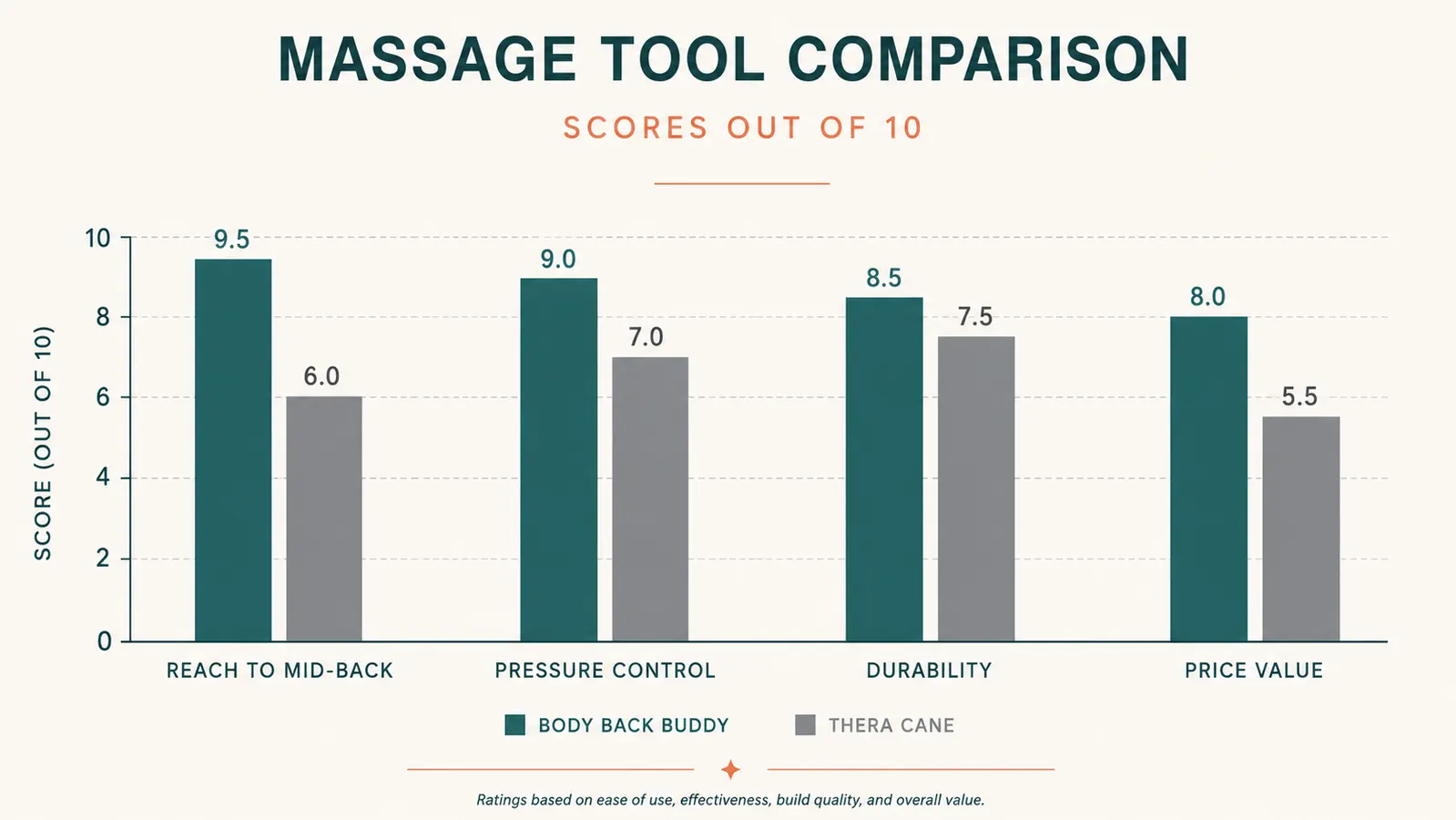
How I Actually Use Mine on the Route
My routine is boring but it works. End of shift, I sit on the bench in the drivers' room for about ten minutes before I even change out of uniform. I hook the Body Back Buddy over my shoulder, find the tight spot next to my shoulder blade, and lean into it with slow, steady pressure for thirty to forty-five seconds. Then I move to the other side. After that I work the lower back hooks against the base of my spine where sitting all day tightens everything up. It's not relaxing exactly, it actually hurts in that specific deep way a real knot hurts, but by the time I'm walking to my truck my shoulders have dropped about two inches from where they were when I clocked out.
On nights when I skip it, I notice within a day. My neck gets stiff turning to check my mirrors, and by the third day of skipping it I've usually got a headache that starts at the base of my skull. That's not a medical claim, that's just what happens to a 56-year-old body that sits behind a wheel for a living. The Body Back Buddy isn't a miracle, it's a tool, but it's the one tool in my bag that gets used every single day without me having to talk myself into it, which counts for more than any feature on a spec sheet.
What Other Shift Workers on My Route Told Me
I didn't just take my own word for this. I asked around the depot and got a handful of the guys and a couple of the transit dispatchers to try both canes over a few weeks. The nurse's husband I mentioned earlier still uses his Body Back Buddy daily, mostly on his lower back and hips after long stretches of standing at bedsides. A warehouse worker I know who does forklift shifts said the Thera Cane's rigid feel actually suited his thicker shoulder muscles better, which lines up with what I already told you about bigger frames. Nobody hated either tool, but when I asked which one they'd grab first without thinking, six out of seven picked the Body Back Buddy.
The one dispatcher who preferred the Thera Cane admitted it was mostly habit, she'd had hers longer and knew exactly how to angle it for her upper traps. That's a fair point worth repeating: once you learn a tool's angles, familiarity counts for something. But when I handed brand new users both canes at the same time and asked them to find a knot in their own back within the first two minutes, every single one of them reached the spot faster with the Body Back Buddy's longer curve. First-time ease of use matters if you're the type who tries something twice, gets frustrated, and lets it sit in a drawer.

Price and What You're Really Paying For
Both of these sit in roughly the same price range, so this isn't really a budget decision, it's a design decision. You're not paying extra for the Body Back Buddy, you're just getting a tool that's shaped for how a real body actually moves. It's made in the USA and it's FSA eligible, so if you've got a flex spending account through work, you can often run it through that instead of paying out of pocket at all. I didn't know that when I bought mine, one of the nurses on my route pointed it out to me later, and it made the decision even easier the second time I bought one as a gift for my brother-in-law who works warehouse shifts.
Durability matters too when you're comparing today's price against how long the thing lasts. Mine has been in a bus bag getting tossed around, dropped on concrete, and left in a hot vehicle more times than I'd like to admit, and it hasn't cracked or lost its shape. The molded polymer feels more solid to me than the Thera Cane's PVC pipe construction, which started to feel a little brittle at the joints after about a year of regular use in mine. If you're buying a tool you plan to use for years, not months, that build difference adds up more than a few dollars ever would.
Who Should Buy Which
If your pain lives between your shoulder blades, in your lower back, or up into your neck, and you're the one who has to work it out solo because there's no partner around at 11pm when you finally get home, get the Body Back Buddy. That's most of the drivers, nurses, warehouse workers, and trades guys I know, myself included. If you're a bigger-framed guy who's tried a Body Back Buddy and found the reach a little tight, or you specifically want a firmer, more rigid tool for larger muscle groups and don't mind repositioning your grip a bit more, the Thera Cane is a legitimate alternative worth trying. Neither one is a bad purchase. But if you're only buying one massage cane and you want the one that gets used every shift instead of ending up in a drawer, the Body Back Buddy is the one I'd hand you.
Twenty-two years behind the wheel taught me one thing: reach matters more than looks.
This is the cane that's actually in my bag every shift, not the one collecting dust at home. Grab it before your next long stretch of shifts.
Amazon Check Today's Price on Amazon →