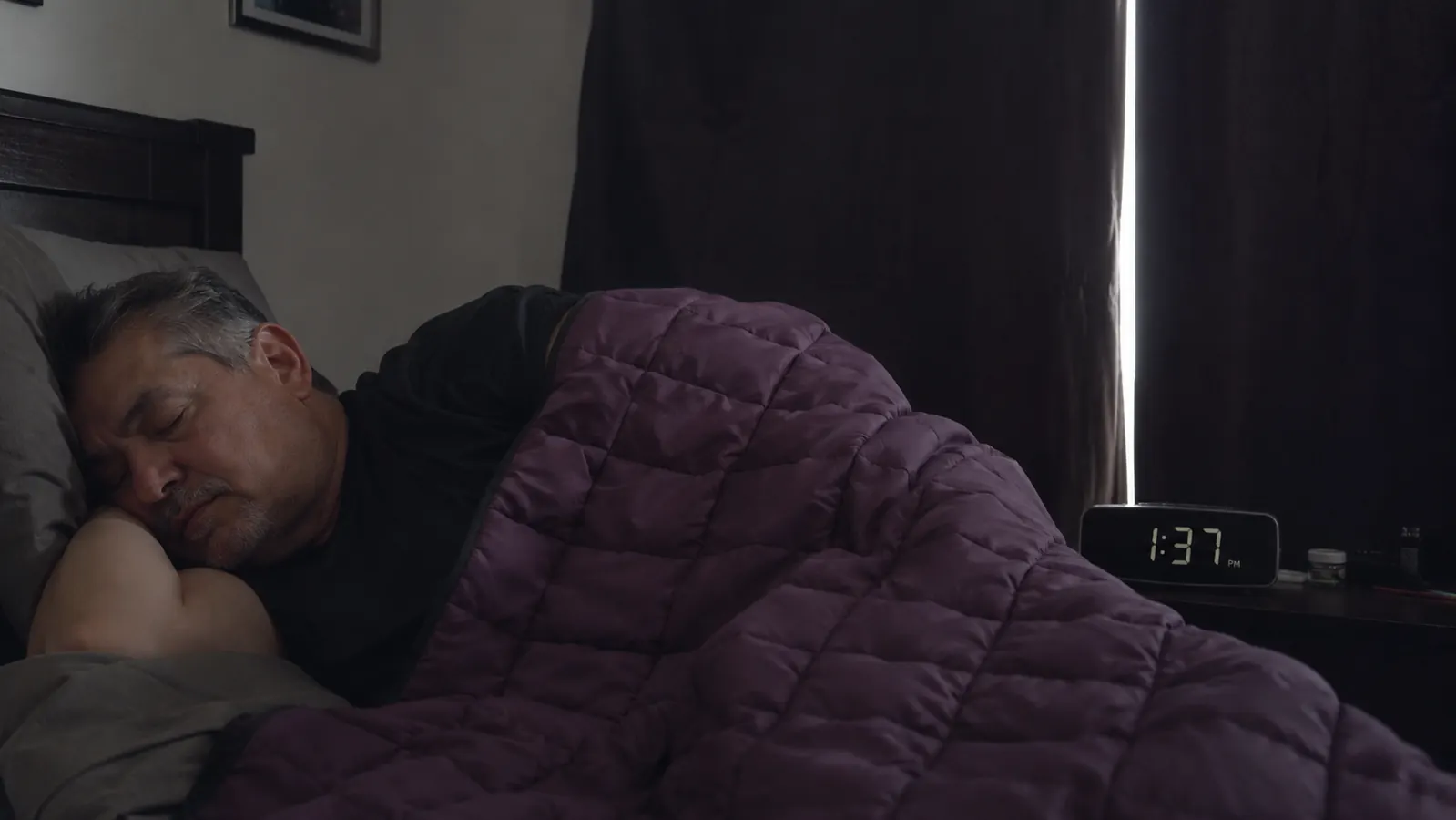
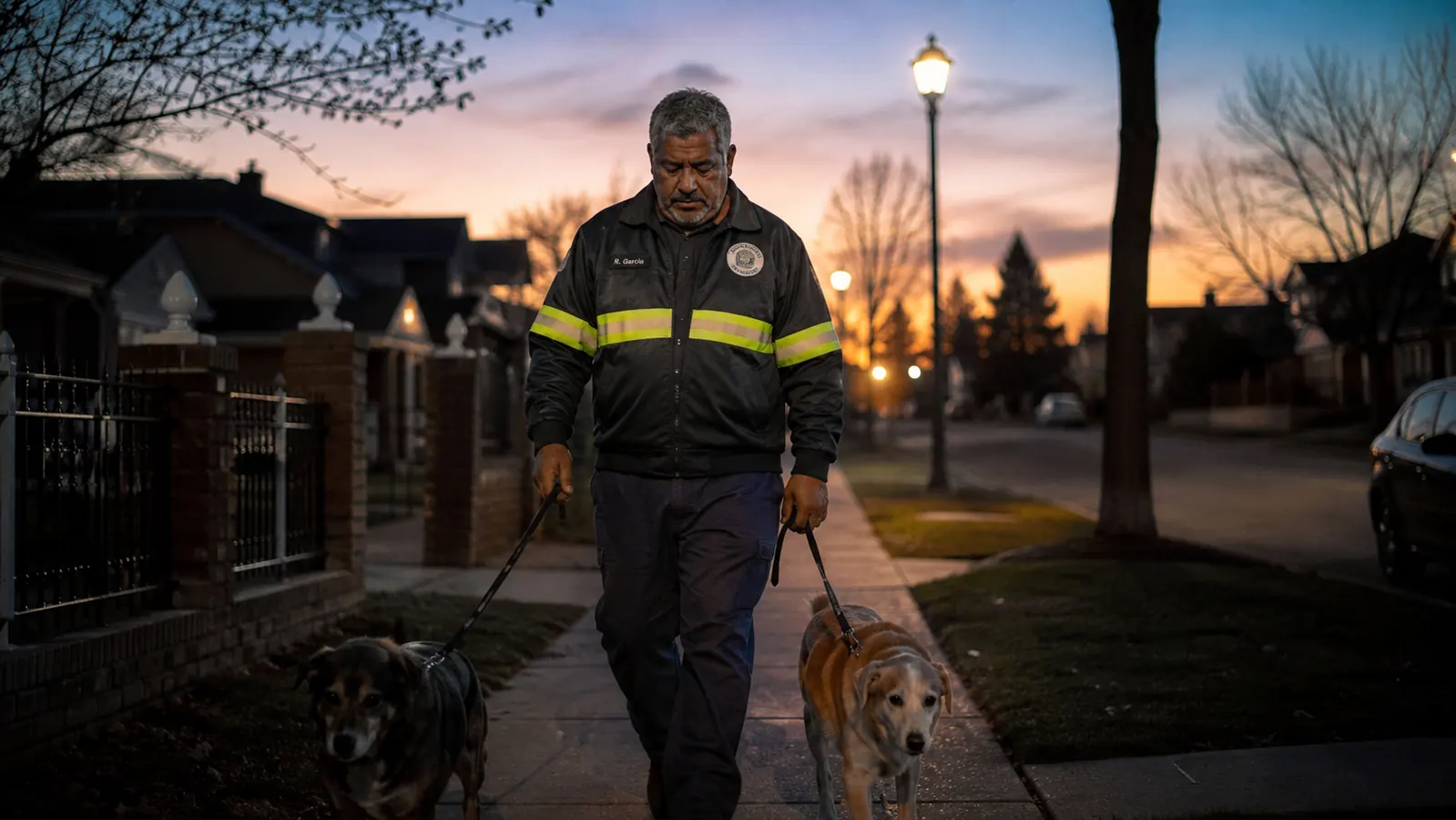
I drove routes for the regional transit system for twenty-two years, and about six of those years I worked the split nobody wanted, out the door at 4 a.m. three days a week, then back for the evening rush on the other four. My body never picked a side. Connie used to say I lived in two time zones under one roof. What wrecked me wasn't the driving. It was trying to sleep at nine in the morning with the sun coming through the blinds and the neighbor's landscaping crew showing up on schedule like they'd been hired specifically to ruin my life. The thing that finally moved the needle for me was a yescool weighted blanket, and in this guide I'll walk you through exactly how I use it to sleep better after night shifts.
If you're reading this after a night shift, whether you're a nurse coming off a twelve-hour rotation, a warehouse picker finishing overnight fulfillment, or driving a route the way I did, you already know the problem isn't falling asleep exactly. It's that your body doesn't believe it's supposed to be asleep. Daylight, a stomach still running on shift adrenaline, a house that's wide awake around you, none of that tells your nervous system to shut down. Sleeping better on an inverted schedule takes more than being tired enough.
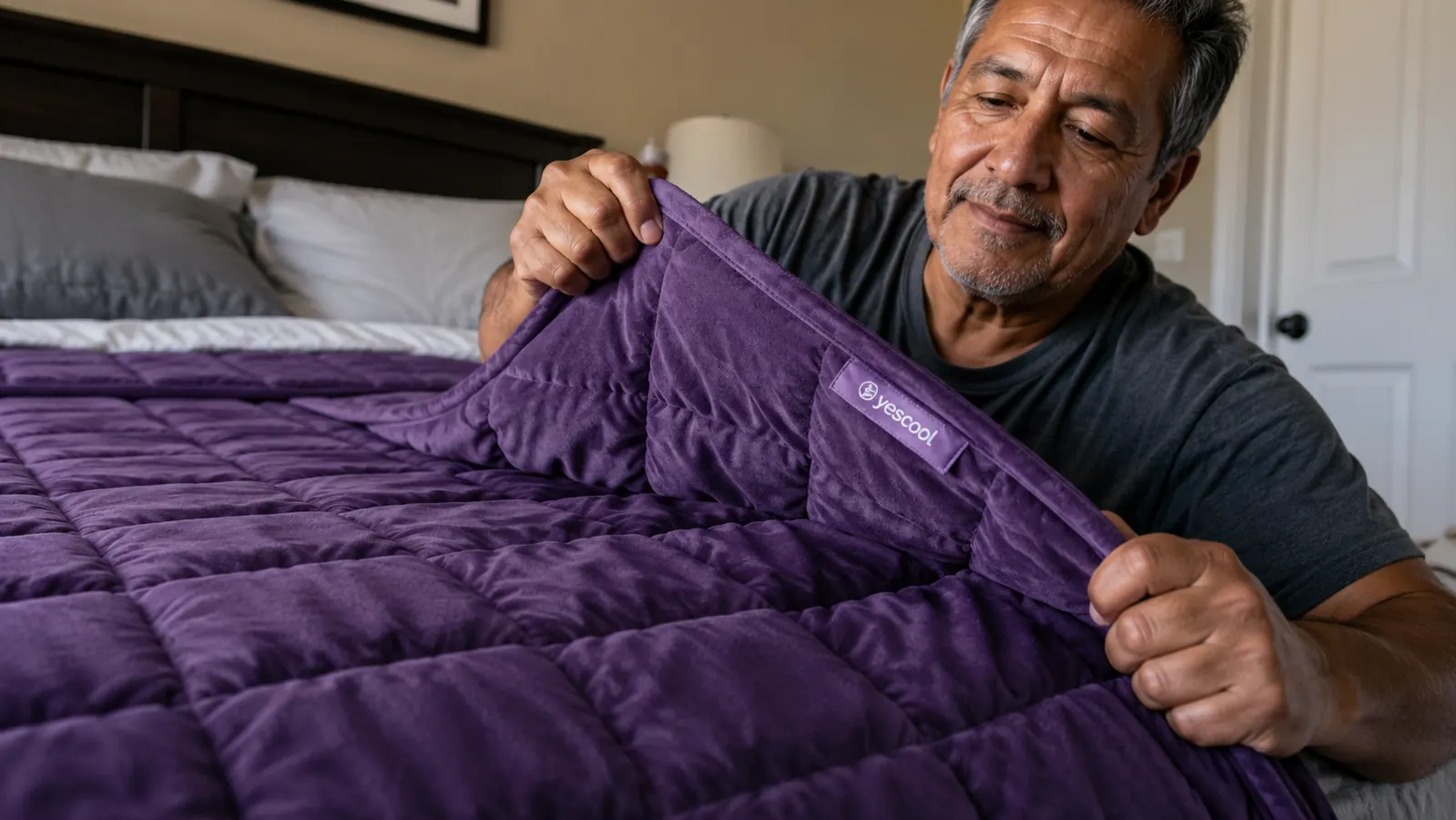
The tool that actually changed this for me is a weighted blanket, specifically the yescool 20-pound one that's been on my bed for over a year now. It's not a miracle and I'm not going to sell it as one. What it does is give your body a physical signal, steady pressure, the same way a firm hug settles a fussy kid, that tells your nervous system it's safe to power down even when the clock and the sunlight are arguing with you. I'm going to walk you through the exact routine I built around it, step by step, because timing and setup matter almost as much as the blanket itself.
Still lying there wide awake an hour after your shift ends?
The yescool weighted blanket is the tool this whole routine is built around, 20 pounds of even, calming pressure that works whether you're falling asleep at 9 a.m. or 9 p.m. It's under sixty dollars at today's price. Grab one before you read the steps below so it's on your bed before your next shift.
Amazon Check Today's Price on Amazon →Step 1: Pick the weight before you pick the routine
Most people get this backwards. They buy whatever weighted blanket is cheapest or on sale, then wonder why it feels like nothing or feels like sleeping under a car hood. The rule that actually holds up is roughly ten percent of your body weight, give or take a few pounds either direction depending on how you sleep. I'm 190 pounds and the 20-pound yescool sits right in that range for me. If you're closer to 150 pounds, you'd want something lighter. If you're pushing 220, you might want to size up.
The glass beads inside the yescool matter here too, not just the total weight. Cheaper blankets use plastic pellets that clump into lumps after a few washes, and once that happens the pressure stops being even, it turns into a blanket with rocks in random spots. Glass beads stay distributed, so the weight feels the same across your whole body every single night instead of bunching up over your feet by month three.
I made the mistake of guessing on this once, years before I found the yescool, with a blanket a coworker recommended that turned out to be way too light for my frame. It felt like a regular comforter with extra laundry day stiffness, no calming effect at all. Get the weight right first. Everything else in this routine depends on the blanket actually doing its job once you're under it.
Step 2: Build a fifteen-minute landing window before you get in bed
Your body needs a runway between shift and sleep, not a cliff edge. I used to come home off a 4 a.m. route, scroll my phone at the kitchen table, maybe eat something heavy, then wonder why I was staring at the ceiling an hour later with my mind still doing route math. Now I give myself a strict fifteen minutes, blinds already shut from the night before, phone left in the kitchen, and I'm under the weighted blanket before my brain has a chance to catch up to the fact that it's technically morning.
The blanket is what makes that short window work. The moment that weight settles across my chest and legs, it's a physical cue my body recognizes the same way it recognizes a seatbelt clicking into place, something is starting, and that something is sleep. Skip the window and even a good weighted blanket has to fight against a nervous system that's still revved up from your shift. Give it the fifteen minutes and the blanket does most of the work for you.
Step 3: Kill the light before you touch the blanket
A weighted blanket handles the physical side of settling down, but it can't fight daylight leaking through a regular curtain, and daylight is the single biggest reason night shift sleep falls apart. I put up real blackout curtains in our bedroom, the kind rated to block essentially all outside light, not the thin decorative ones. Within a week of doing that alongside the blanket, the difference in how fast I actually fell asleep was bigger than I expected from something so simple.
I also cover the alarm clock and any little standby lights on chargers with a spare sock, which sounds ridiculous until you've tried to sleep in a room that's dark except for four tiny blue and green dots. Your body responds to even small amounts of light more than most people realize, especially when you're already fighting your internal clock to sleep at the wrong time of day. Dark room, then weighted blanket, in that order, is the combination that actually gets you unconscious instead of just lying there tired.
One thing I'd add here, don't rely on an eye mask as a substitute for real blackout curtains if you can help it. I tried that route first because it was cheaper, and I kept waking up with it shoved sideways off my face by 11 a.m. every time. The curtains stay put. Combined with the blanket, that's the setup that finally stuck.
Step 4: Solve the heat problem before it wakes you up
This is the complaint I hear most from other shift workers who try a weighted blanket and give up after a week, they say it's too hot, especially sleeping during the day when the house is already warmer. It's a fair concern, twenty pounds of fabric traps heat if the material's wrong. The yescool is built with a breathable, cooling outer layer specifically because of this, and it's the reason I stuck with it when an earlier heavier blanket I tried had me kicking it off by hour two, sweating and more awake than when I started.
I also dropped the thermostat two degrees lower for daytime sleep hours than what we run at night, since your body needs a slightly cooler room to fall and stay asleep regardless of the clock. Between the cooling fabric and the lower room temperature, the overheating problem that used to wreck my daytime sleep basically disappeared. If you're sleeping under a weighted blanket and waking up damp, it's almost always one of those two things, not the concept of a weighted blanket itself failing you.
Step 5: Protect the sleep once you've got it
Getting to sleep is only half the fight on a rotating schedule. Staying asleep for a full block is the part that actually lets your body recover from a long shift, and this is where the weighted blanket keeps paying off in a way I didn't expect. The steady pressure seems to cut down how often I wake up and toss around mid-sleep, probably because there's less of that restless shifting your body does when it's not getting the calming input it needs. I used to wake up two or three times most mornings without ever fully remembering it. Under the blanket that dropped to almost never.
I also stopped checking my phone if I did wake up briefly, which sounds obvious written down but took me months to actually stick to. One glance at a bright screen at noon and I was up for the day whether I wanted to be or not. Now if I stir, I just settle back under the weight and let it do what it does. Most of the time I'm back out within a couple minutes.
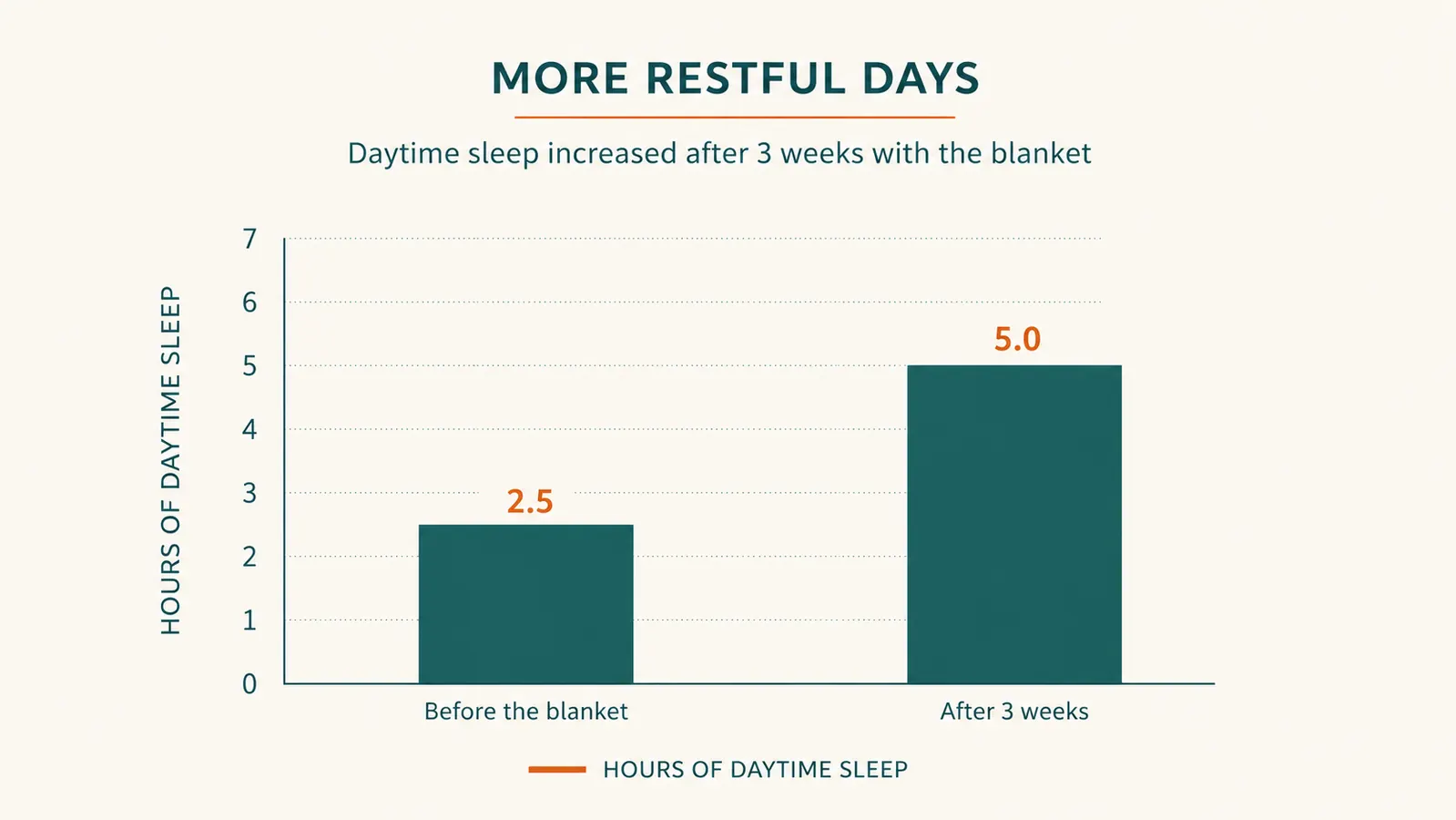
I kept a rough log the first month, jotting down roughly how many hours of real sleep I got after each shift, not just time in bed. Week one I was averaging under three hours of actual sleep most days. By week four that number was closer to five and a half, sometimes six. That's not a small difference when you're operating a bus full of people the next evening. It's the difference between running on fumes and actually being sharp.
What Else Helps
The blanket handles the biggest piece of this, but a few other habits keep the whole thing working. I stopped drinking coffee in the back half of my shift, even the decent decaf still has enough caffeine to mess with a body that's already fighting its own clock. I also stuck to the same landing routine on my days off as much as I could, going to bed and waking up at consistent times rather than flipping back to a normal schedule every weekend, which resets your body clock and makes the next shift's sleep even harder.
A white noise machine helped more than I expected too, since daytime sleeping means fighting delivery trucks, lawn crews, and neighbors living their normal daytime lives right outside your window. None of that replaces the weighted blanket. It's more that the routine works best when everything around it, the dark room, the quiet, the timing, is pulling in the same direction instead of working against the one tool that's actually doing the heavy lifting. Nurses and warehouse workers I've swapped notes with online say the same thing, the blanket for the physical calm-down and a handful of boring habits to protect the sleep once you've got it.
Twenty pounds of pressure across my chest does more for falling asleep at 9 a.m. than an hour of trying to force it on my own ever did.
Twenty-two years of rotating shifts taught me this routine works
The yescool weighted blanket is the tool every step above is built around. It's held up through more washes than I can count and it's still on my bed after a year of daily use, day sleep and night sleep both. Check today's price on Amazon and get it on your bed before your next shift.
Amazon Check Today's Price on Amazon →